Summarise the duties that you performed in your role this week?
This week there was a lot to get done before the actual live day. My duties was to continue familiarising myself with the technology as this was a new job that i hadn't done before. But also as i had some spare time i was able to help out my team such as the set designer and the features producer with any filming or getting certain sets prepared on time. There was only limited times that i could really get to grips with what i would be using but i tried to make the most of my time and elp out any one else as i have had experience on sets before.
What has been successful this week?
This week the main success came with preparation and trail & error. There was a lot to get done and everyone really came together to not only prepare well but to all have some tricky run throughs but come back even stronger each time. Whilst we didn't stick completely to the scripts at times, we did come together to get everything finished and ready for the live day. With any production there will be some challenging times but they only made us better at our individual jobs and propel us well for the live day.
What do you need to change or develop and why?
There was not one particular thing that we needed to change or completely redo. I think that there was some confusion over the master script, running order and the presenters script, but with communication that was ironed out. In hindsight it was better for this to happen before the live day, because then we knew what the problems were and how we could overcome them so that the live day ran more smoothly.
How did you work with your team this week?
Working with my team this week was especially important, we all needed to communicate to make sure that everything was running on time and prepared well for the live day. I felt that i worked well with everyone because we all depended on each other to get our own individual jobs done well so thatwe could perform our own. This week became a real team effort it tested us as a class but we all pulled through and we showed great spirit to be ready to produce a great piece of work.
Summarise the duties that you performed in your role this week?
This week i put together a video of all the transitions that i could possibly use during the live show. I then analysed each transition and decided which ones looked bad and what ones suited the themes of the show, to which we could use.
What has been successful this week?
This week we got the cameras set up and planned out how the set would look like. I particularly has success in using the equipment for my job and trying out each transition. I was able to find out what would be suitable and ultimately prepare my self better for the live day.
What do you need to change or develop and why?
I dont think there was a lot to change as it was clear which transitions would be useful to me and the show. I think that i would need to develop my skill in the use of equipment just so that during the live day i am very smooth in the transitions, which would make the show flow better.
What do you intend to do next week?
There is not a lot more for me to do in terms of preparation for the live day. I will be helping Franki with some of the pre-records and going to film with him. Equally ideally i would like to use the equipment again so that i can feel more comfortable and familiarise myself with it better.
How did you work with your team this week?
I worked with the Camera Operators largely as they was setting up the cameras which then allowed me to start using the different transitions and cutting across different cameras. I also worked with Stephen who was in charge of lighting as we needed to decided what looked best on camera.
The first transition is a simple dissolve, it looks the most sophisticated and i would be simply used when we are presenting the news segment of the show. Equally it could also be used as a little effect to break the segments up, even though the presenters will still be in the studio live. As the transition is a more formal and simple one it just allows us to break up the show and clearly distinguish the different parts.
The second transition was also a fade, although it fades to a background, which i would use when we are closing the show. As i can use this transition the VT operator can then cut to the closing montage for the show.
The third transition is a wipe from right to left, it perhaps is inappropriate for our show as it wouldn't carry any connotation with it. We may consider using the wipe from left to right which would fit in when we use the other parts of the studio for other live content. However it may be easier for use to use a cut and these wipes may not look professional enough for our show.
This next transition was interesting, as it could be a more creative transition for Faris. The transition pushes the third camera out from the middle, to fill the screen. As faris is going to portray more of a humorous, slapstick presenter having more silly transitions may only increase his characterization and help our show.
The next transition was interesting as the idea is very useful for what we want to do with the snapchat reactions. We want to have a split screen or a smaller screen for the snapchats and then have the screen largely for the presenters. However this transition uses camera 3 as the smaller screen which would not be useful to us as we will be constantly moving cameras to set up other segments of our show.
The next transition is a page flick or page turn where the screen changes from the top right moving to the bottom left. The transition is something that we would not need to use, it doesn't look aesthetically pleasing and wouldnt fit the style for our show, The transition wouldn't carry a significant connotation for our show and thus we will not use it in our show.
Equally the transition opposite where the page turns from top left to bottom right could potentially be developed. It carry's more of a significant connotation where we can clearly distinguish the separate segments of the show, it does also carry a more comical effect which would of course suit Faris' presenting style.
There is potential for this next transition as it wipes the screen from top to bottom. It does allow for a more smoother transition to when we cut to a pre-record or another live segment in the studio. This transition does carry more of a connotation which is to show the audience that we are moving on, in comparison to some transitions that don't really make much sense.
Another transition would denote the middle of the screen pushing up and down to fill it. The transition seemed unprofessional and wouldn't fit the style that we want for our show. We would not use this transition as it doesnt have a certain connotation that we want for our show.
The last 2 transitions would be the page turns that start from the bottom corners and finish in the top corners. They seem better to use as they look visually better and whilst they still carry a more comical effect with Faris' style, they potentially could be used for Jamaine as well. They dont look to frivolous which would allow us to maybe get away with using them.
Summarise the key points you made this week within your role.
This week i was working with the 2 presenters and the director to help put together the running order for the show. I felt i contributed well and we was able to get a clear timed running order completely finished. There was a lot of ideas that was available to us and we was able to get lots of variety from everyone's pitches which made for a very diverse running order.
What was the groups response to your ideas/progress?
The group responded well to my ideas while we was planning the running order, i thought that they liked the mix of ideas i suggested between the live and pre-recorded content. Equally in the production meeting which i was not able to attend the feedback that Jeevan, Jamaine & Faris received was very positive, and the whole crew was excited by the potential of the show from our running order.
What has been successful this week?
This week the success came from the completion of a timed running order, we was slower to begin with as we had a lot of ideas that we could of used. But ultimately we was able to gather a real direction that we wanted the running order to head in, and everyone that worked on the running order seemed to be happy with how the completed one turned out.
What do you need to change or develop and why?
I dont particularly think that there is a lot to change, but we still need to develop our timing as they were only a rough estimation. Also we needed to talk to the set designer and really develop the sets for certain segments of the show. As a whole though the running order was good and we didn't think there was a lot to change.
what do you intend to do next week?
Next week i intend on getting some of the transitions sorted for the show. I need to get used to the equipment that i will be dealing with and i need to make sure i have the right ones which will be suitable for the certain tone of the show.
How did you work with your hierarchical peers this week?
I worked with the director, presenters and the features producer, i feel that we all worked very well together. We all contributed equally and expressed loads of creative ideas and different routes that we could go with for the show. I felt that it was very effective to work in a group to plan the running order for the show, as there was a lot of creativity involved.
The production meeting went well, everyone voiced loads of different, creative ideas that not only fitted the brief well but also interacted with the audience well. The production meeting was run by everyone getting 4 mins to pitch their whole ideas to everyone, afterwards we asked some questions about the specific idea, and ended the meeting with a vote of the best idea.
What was the groups response to your idea?
The group had some positive feelings towards my idea, i was second to last to pitch my idea which perhaps worked against me as lots of good creative ideas had already been put forward. I thought the group did seem to appreciate certain aspects of my idea, such as some pre-recorded content and some live segments.
Whose idea did you vote for?
I voted for Franki's idea, as it seemed well planned out and very structured, also his live content was very creative yet simple which meant it could be filmed very professionally. I thought that he had a clear idea of what the set would look like and how every piece of content would be filmed, plus he did have some good audience interaction which fits the brief as well.
What did you like about the idea?
I liked the fact that Franki had some good content ideas, such as thew live performance, as well as having some good audience interaction which ran throughout his show. The audience interaction was not the typical tweets or facebook messages, he went more creative then that which is something that i liked. I also liked His technical aspects as it seemed through his pitch that Franki really knew how everything was going to be shot which makes it easier for every crew member.
What aspects related to the brief?
A main aspect that fitted the brief from Franki's idea was the audience interaction, he was very creative and meant that E4 could present the show in more of a personal way as the audience could really get involved in the show with Franki's idea.
What areas did you think needed development?
Perhaps the dance challenge could have been improved in Franki's idea, whilst it was fresh and does link back to the brief. It could have been improved by perhaps incorporating the audience into it or just having some further development on the idea, in terms of where and how it would be shot and who would take part to make it really appeal to the audience.
What other ideas do you think could have been incorporated into the final idea?
Other ideas that could have been incorporated i thought could be Faris idea, of doing a rap battle with the audience, which was especially creative. I also liked Jeevans idea of having a pre-record talking to me and franki about why we chose to go with a certain direction with our music video, and why it was so unique.
The programme format for my show would include: game, chat & magazine show. It is mainly a magazine show as it does cover a lot of different things surrounding music much like 'Soccer AM' or 'Top Gear.' the show is not just constant interviews but rather has lots of different elements that are comical but also serious and more meaningful. In some respects the show is a game show, as we have some live content such as the 'Crossbar challenge' which includes some quick fire questions. The participants are guests that are linked with the show and have to race against time to hit the cross bar. Of course during my 'lads night out' segment where the presenters will talk to the guys about the concert that they have just been too, would also make the show a talk show.
Content Ideas- Live
For my live content i would start with a more news based segment called, 'who's hot, who's not' in which a presenter briefly talks about any new albums or artist that have been in the news recently. I would then have tweets popping up on screen which the presenter would read out, which would be opinion based, on a certain album or artist.
My second piece of live content would be a rap battle between the 2 presenters surrounded by loads of school kids. Of course we would have to pre-record it but would be able to film it as live content.
As part of my 'Lads Night out' segement which is mainly pre-recorded we would also have a very minor/brief interview with them just to see how the night out was and whether the concert was good or not.
As the last piece of live content for the show would be a crossbar challenge with some music based questions before hand to allow the contestants a certain amount of time to hit the crossbar. I would end the show there on the football pitch. Whilst this is impossible to do actually live i would pre-record it but act it out as if they were live. The people participating would be the film makers, and artist that performed in the music videos.
Pre-Recorded Content
For my Pre records i would put together a short film based all around Jamaines life, with his a voice over talking about the struggles he's gone through and why he chose to make the music video, & what some of the lyrics meant to him.
'Lads Night out' this is where we would see a group of mates going out to various concerts, and seeing the different artists for anyone that didnt get to go to the concert. Bands would include Avici, Galantis etc.
The music videos that i will include as part of my pre-recorded content would be Bleu & Jamaine's 'behind bars', Franki, ben & Usama's 'Promise Me',
Running Order
The running order for my show would start with a fade in of 2 presenter on the sofa opening the show, giving a run down of the whole show (30 secs). It would then cut to a compilation/montage of everyone's music videos. (1:00 secs)
Afterwards it would fade into 1 presenter while they present the 'Who's hot, Who's not' segment (3:30) of the show which will end with Bleu & Jamaine's music video (4:10).
We would then cut back to the presenters on the sofa as introduce the next piece of pre-recorded content (20 secs), the short film of jamaine, this follows on from the music video that has just been shown (3:00).
Add break
After the presenters would go outside to do a rap battle (3:30), of course it would have to be pre-recorded, but we would film it as live, to which we would then cut to Ben, Franki's & Usama's music video (2:30).
'Lads Night Out' this is partly pre-recorded as we will show the concert (2:30) that they all went to, but then cut back to the studio and have a brief interview with them just getting their opinion of the concert (3:00).
Lastly we would then cut back to the presenters live on an astro pitch, to present the Crossbar challenge with questions before hand to give them a certain amount of time to hit the crossbar. This would have to be pre-recorded but we would film it as live (3:30). We would then end the show on the pitch fading out to another compilation/montage of the music videos (1:00).
Live Recordings- 13:30 mins Pre-Recordings- 14:00 Total- 27:30
Studio Design
For my studio design i will have a 3 camera layout. Camera one would be in a mid shot focused on the presenters, the second camera would be on the guests of the show. Lastly the master camera would show both the presenters and the guests, which would be set up on a slider so i have the option to have some movement in to the opening, closing and interview segments of the show. The lighting will be on either side of camera 1 & 2 so that it will spread out and really help light up the presenters and the guests.
I would ideally like to have sofas for the guests and the presenters to sit on, which would portray the more relaxed feel to the show. I would also like to have the a glass coffee table on set as well, just to carry on the more home, chilled themes of the show. For my second studio design I would have the camera in a mid shot of the presenter, and the projector as the background.
Background
For my background i will have a blue back drop with with some scattered white's, and the logo of the show in the background just to give some life and break up any solid back drop which would be boring. I will also fill some of the background with props relevant to music, eg instruments, lyrics etc. I will next fill the set with a glass coffee table and sofas for the presenters and guests. For my second on set location i will have the projector as my background, so that i can give a visual aid for the audience, which will show the relevant artists and album covers.
Visual Style
In terms of my visual style, i want to be in keeping with E4's colours which are purples, whites etc. Due to some studio constraints i want to keep to the themes as much as possible and use a blue background with some white scattered. The blues are not to bright which continues E4's themes, and the white just gives the set some more life to the set. In terms of the cameras visual styles, i still want it to be simple and more formal where the camera perhaps has some slow simple movement and cuts, as opposed to constantly having the camera moving where it may be hard to do in the studio and would disengage the audience. Having some simple camera language will allow the audience to watch without having to give their full concentration.
Presentation Style
The presentation style for my music show would be in a very relaxed simple style. As the presenters are young and around the same age as the target audience for E4, they will wear some smart casual clothes eg, jeans, Shirt etc. They will present the show with a typical teenage register, which would entail some slang but still keeping a more formal tone of voice, because they need to feel like part of the audience watching as well as seeming some what respectable. The presenters will need good energy levels, they need to feel excited and seem passionate about what they are talking about. However, they cant be to excited as it will seem almost fake, and wont fully engage with the audience.
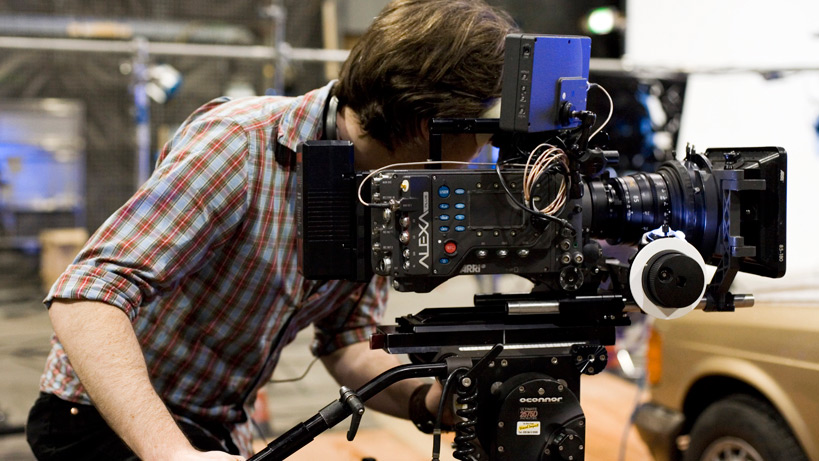
Three key duties that a camera operator would have to do would be: to have a good working knowledge of all camera systems, lenses & supporting equipment, as employee are typically on fixed term contracts and will constantly move around working for various institutions, each time the camera operator may work with different camera brands/models. Thus needing a widespread knowledge of all different types to carry out their job expertly. The second duty of course would be to wield the camera with perfection, anyone can pick up and hold a camera, but this job entails more experience and a more fluid motion with the camera. Lastly the third duty would be to work well collaboratively, of course as a camera operator they are a part of a team, working with other operators, the director etc. As an operator part of the job is knowing where you need to be at the right time to get the shot.
skills
• As a camera operator a main skill to have for the job would be to have good sense of visual composition, perspective and movement. The job constantly requires the person to visually be aware of where to be positioned during each film shoot, and to have a good sense of depth & timing would only improve your quality.
• To be a good camera operator having a good eye for detail is very important, perhaps an angle is not right or the framing of the camera shot is not perfect. To have that attention to detail and perfection would certainly improve the quality of their work.
• Of course if as a camera operator to have a good creative mind which would only improve the quality of the content in terms of camera language, but also to combine the ideas with the correct technical aspects and know what shots could be done with certain types of equipment.
Qualifications & Hierarchy
In terms of qualifications there are no specific things that a camera operator requires, most of the
skills are learnt whilst on the job. As there is a lot of hands-experience on the job only a minimal
amount of qualifications are needed (GCSE, A-Levels)
In terms of the hierarchy the camera operator is not very high up, of course they have assistants but they mainly have to listen to the directors, cinematographers and work with others like the set designers.
Sound Mixing
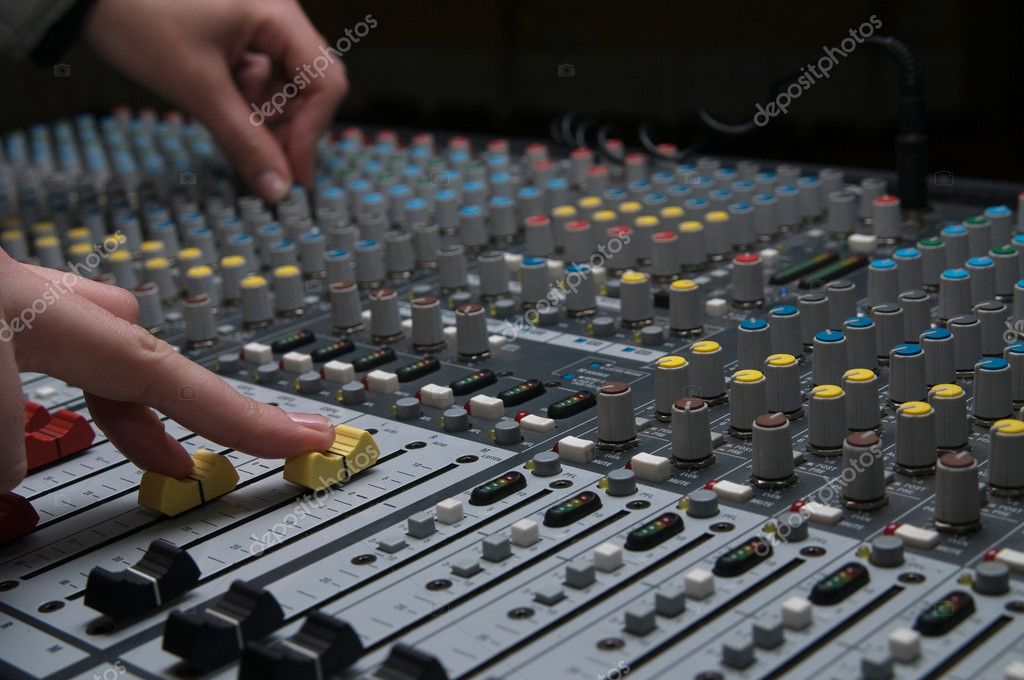
One key duty for a sound mixer would be to know sound, they need to be able to manipulate various audio levels throughout a broadcast so that some things are emphasised more then others. They also need to be understanding as to what can actually be done. Sound is something that is very fragile and only needs tiny changes. Of course a sounder mixer needs to know the types of equipment, some of course like cameras are more common then others but depending on the budget of the broadcast/program each job may be different.
Skills
Whilst being creative and intiquetly manipulating the audio, it is not always the easist or best thing practically. A main skill for the sound mixer is to find the right balence in what is practical with the use of equipment and the creativity.
Audio levels are a very technical thing to do and there needs to be goo communication skills with the presenters, director etc, to make sure that during the live broadcast everything can be heard clearly.
Audio is very hard when trying to change it, and can often lead to problems, as the sound mixer they need to be very skilled in making fast changes to ensure that they can get the audio back or to come out clearer.
Qualification & Hierarchy
The qualifications needed for this job would be a higher level of education e.g. degree, but what was stressed was the need for experience in this job, so being around the job and working on a lot of different projects would help them to get the job.
The sound mixer is someone with a lot of experience, however they are still below the director and work closely with people such as the VT operator and vision mixer.
Vision Mixing
One key duty of a vision mixer is to be able to work on a variety of different equipment and vision mixing desks. Different institution will have different pieces of equipment and to be a professional, they will need to know how things work to perform their job. Furthermore, a vision mixer would need to have good timing, and be able to transition in to different camera, and footage. Lastly the vision mixer needs to be respond quickly to specific cues, from the director, aside from good communication being able to respond and act fast is a key component.
skills
As a vision mixer to have excellent visual and aural awareness, combined with artistic and aesthetic abilities, the vision mixer needs to know what camera will look good at the right time, and to constantly build the skill of creativity and timing is key.
To be good the job and have good problem solving is a key skill, as certain things may go wrong with the cameras, and to make decieve decisions along with the director is a vital skill so that the broadcast runs as smoothly as possible.
For the vision mixwer to have good colour vision and detail is a key skill, as they are responsible for some of the colour correction which makes the show look more professional and smooth.
Qualifications & Hierarchy
To have a degree related to the media industry would be worth a lot when trying to apply for this job, It is a job that does seem to want the higher education as other jobs such as the camera operator do not seem to need such higher education.
In her,s of the hierarchy for the vision mixer they answer to the director mainly, and the vision mixer is more in charge of the camera operators to get the shot perfectly lined up.
Director
The main role for a director is to be able to put an idea/concept and not only visualise it but to produce physical content. The directors duty is to create the vision and what some may perceive as impossible to director does it. The second main duty for the director is to problem solve, to know when to use different techniques and other creative ideas if the first plan cant be done. Problems will constantly arise through a live broadcast and the director needs to be quick to overcome them. Lastly, as a director it is a key duty to make the content sell-able, perhaps the most creative idea would not make much profit, and ultimately that's the main job of the director is to produce content that will make money.
Skills
Many of the crew will want to add a creative input in to the content, and as a director to have the skill to almost be a democracy with everyone is almost an invaluable characteristic to constantly try an improve on.
As a director it is not only about how the content visually looks but also how fitting sounds and music are for certain segments of the program. To be decisive and knowledgeable about different styles would certainly make someone a better director.
To have a methodical approach to work, along with a high stress tolerance and stamina is a major key to being a good director. They are responsible for everything which is a lot of pressure to handle, the day seems long as different crew members are constantly asking for your opinion which is stressful but the skill is to constantly be calm and on top of everything.
Qualifications & hierarchy
Qualifications to become a director are not specific, but a higher level of education eg degree is highly regarded when applying for the job. However a lot of the key duties are learnt in the job, so experience is vital to progress.
In terms of hierarchy as the director you are close to the top, of course the producers and the institution are above you. but the director is in charge of the camera operators, the set designers, vision & graphics designers etc. Whilst everyone has their individual sections the director has overall control.
Set Designer
As a set designer a key duty would be to have an understanding of how to build and construct different things either for on screen props or to construct something that acts in place of a piece of equipment behind the camera. Furthermore, a Set Designer needs to be able to have a good understanding of budgeting, there is only a set amount, and a lot of detail goes in to a set. So making sure that the set stays within the budget is key for the overall program. Lastly, perhaps one of the most important duties as a set designer would be to gather a script or an idea and physically create it for the director.
Skills
a key skill of the set designer is to be mindful of everyone else's job, the camera operators, lighting, etc, all have to work around your designs. So to be helpful and take in to consideration everyone else's needs is a key skill.
Whilst being creative is a good skill to have, the set designer also needs to have a good understanding of structure when building their sets, the skill comes in the balance between creativity and practicality.
A large skill to have as a set designer is to not only pay attention to the minor details but also to see the broader picture. Sometimes changing to many little things doesn't help the overall look, so just to step back and see everything clearly is a major skill to have.
Qualifications & Hierarchy
In terms of qualifications needed to become a set designer a degree in media or an art would be necessary. However set designers learn from experience and problem solving whilst in the job.
For a set designer the hierarchy would be to answer to the director and vision mixer, but to work closely with lighting, camera operators etc.
Lighting Desk
One key duty of a lighting manager would be to know what type of light and where the light should go, so that the presenters & guests look good on camera. They need to know how to create certain angles for the light to go in and also they have to think about the shadows that may be caused by on screen people. A further duty would be to receive a script and make things work, lighting is vital as to what detail the camera picks up, so they need to make a set look like what the director in-visions. Lastly the use of homemade props and accessories will need to be used, as sometimes the light needs to be in awkward positions, so creative ideas need to be implemented.
Skills
The lighting job is something a little less creative and more logical, they need to be skilled in the positioning of the light and know how to solve any problems with shadows and dark spaces.
A plan has to be in order for the lighting, there are a lot of different shapes and bulbs that could potentially be used and the skill comes when they can be decsisve as to what one works the best.
Lights are very hot and heavy to work with, the job requires physical strength to constanly be moving the lights all day, as a skill, the person needs to be smart in the positioning and even the lifting of the lights.
Qualifications & Hierarchy
This job does not require any higher education qualifications but does specify the courses in lighting will be needed to perform the job.
The lighting manager works closely with the set designer, camera operators etc. Whilst the director, vision mixer are above them they still have to communicate well with others that make up the set.
Floor Manager
One key duty that a floor manager needs to have would include organisation loads of different guests, as to getting them to come on to the show and then the timing of the guests appearing on the show. The floor manager is responsible for dealing with a lot of the timing in the running order of the broadcast. Another key duty for the floor manager is to be decisive in the technical elements, a mic may fail or a wire may split, and the floor manager needs to work quickly to fix or work around any problems. The last duty for the floor m
Skills
The first major skill as a floor manager would be good communication and interpersonal verbal skills. This would help to schedule the guests in for the programme as well as talking to the director for when the guests appear in the running order.
Another main skill to have would just being calm and handle the stress of the job, much of the show is dependent on you and getting the guests to the broadcast. Also the floor manager has to deal with the camera operators, lighting, set designer etc, and get everything in place for the director.
Lastly a good skill to have as a floor manager would be to multi-task and solve problems, whilst the floor manager is dealing with the guests and preparing them to go on, they also need to be listening to the director in case there are any changes they want to make, which the floor manager has to do.
Qualifications & Hierarchy
In terms of qualifications, it would be good to have gone through further education and have a degree in media or design. Whilst experience on the job is crucial, it is good to have an understanding of how everything works in a TV broadcast.
In terms of hierarchy the floor manager works closely with the set designer, camera operators, lighting etc. and has to listen to the director as they may want to make changes to the set.
Graphics Designer
One key duty for a graphics generator would be to understand and produce graphics that specifically fit the brief giving to them. They need to be high quality and look very professional for the show, which would require the designer to sit in a studio for long periods of time and work hard on creating the graphic. Another key duty would be how they need to feel comfortable and confident with what they create as they need to be approved by the director first, to which they may be critical of your work. Lastly, the graphics designer would need to know a range of different software to create graphics on. The majority of institutions may have just one of all of the programs, but the graphics generator needs to be familiar with everything.
Skills
Whilst the graphics designer needs to have good communication skills to interpret the briefs well, they also need to voice their ideas and concerns with specifications to the director, VT operator etc. Its up to the graphics designer to say something if the idea could be improved or even the time frame that they need.
The skill of the job comes down to the smallest of details. To become a better Graphics designer to see a minor mistake and amend it or to go beyond the brief will only improve their skill in the job.
Allowing other to be critical and want to change your work is something that will constantly happen in the job, but the skill is to be calm and open to the changes. Whether the changes make the work look better or not is ultimately not up to them, and the skill is in being restrained and happy to change it.
Qualifications & Hierarchy
In terms of the qualifications needed, a degree in media studies or something such as art would be very useful as it is a very creative & technical job.
As for the hierarchy the graphics designer has to listen to the director for a brief, and work with the VT operator and vision mixer.
VT Operator
As a VT operator to be able to solve technical problems is key, equipment can always fail and they need to be able to know how to fix it or work around it quickly. Furthermore, every VT operator needs a good understanding of various makes and models of equipment that they use. different institutions have different equipment and they need to know each one on a good basis to perform their job. Lastly a key duty would be to know how to convert certain file formats on computers and make certain copies of things to later add in.
Skills
As a VT operator it is key that they have a good understanding of all of the post production equipment, of course this may be seen as a duty. however, the equipment is something they can learn and get better at, also it may also benefit them if they know different pieces of equipment not including their own.
To have a good understanding of different media formats, as they need to be able to integrate the different types of files (pre-records) all in one live show. Learning the best way to convert the files or how to make them all work in one sequence smoothly is something that would only get better with experience.
Problem solving and good IT skills would be a vital skill for the VT operator. The job is very technical and to be performed well their will be a lot of disturbances, to which it is their job to get all of the sequencing right for the broadcast.
Qualifications & Hierarchy
A degree in engineering or IT would defiantly be useful when performing this job, whilst it is not required it will certainly help.
Hierarchy, the VT operator works closely with the director and the vision mixer and like a presenter they don't really tell anyone what position things need to be in, as they are a more technical.
Presenter
As a presenter one main key duty would be to handle a large amount of stress well and make quick decisive decisions, as when on air their might be some breaking news that as a presenter they need to deliver very abruptly and with very little detail as to what the whole story is. A further duty of a presenter would be to understand the actual production process, of course there are technical problems that could go wrong and as the presenter they are the only thing the audience can see and hear. So they need to be able to communicate well and effectively improvise well. Lastly of course it is vital that as a presenter they are up to date with current affairs and events, which will allow you to speak with confidence, and during breaking news the background knowledge they have will help with the speculation.
Skills
A key skill to have would be to have excellent written & oral communication and presentation skills. Of course a presenter needs to communicate with everyone, the audience that are watching and the crew that need to know your script. Mainly though to present themselves in a more serious, formal fashion is vital for the audience to see.
One main skill for a presenter would be eye contact, when talking to the camera, the audience need to feel like the presenter is almost speaking directly to them. The presenter needs to be confident when delivering but it cant be over done, its a skill that needs to be subtle but perfected.
Lastly a presenter must have research and interviewing skills, which are complemented by a formal, intellectual basis. The presenter needs to be skilled in answering the right questions to really unlock the vital pieces of information about a story, speculation is not enough, the presenter needs to get the real information out of the person.
Qualifications & Hierarchy
Whilst there are no specific qualifications needs most presenter do have some form of higher education e.g. a degree. Of course on the job training and learning the different types of skills are vital much like any job in the media industry, but the presenters are able to communicate constantly in the right tone.
the hierarchy for the presenter is difficult, they work closely with the director who would be above them, yet they do not specifically tell any one of importance what to do.
One practical reason for the use of multiple cameras in the World Cup Final, would be to cover all of the action. As the pitch is too big for one camera to cover it all, especially during the biggest stage of world football the play is very fast and will need loads of cameras to not only track the ball but also where it potentially could go.
A further practical reason for using multi-camera in this match, would be able to cut to any action that may happen unexpectedly, at 27:07 which denotes the camera cutting to a German player who has just got injured. This example connotes how an injury that no one saw because the audience was keeping up with the fast counter attack, the multiple camera was able to record both pieces of action and cut back to it. From an audience perspective being able to cut to the players expressions whilst they play in the biggest match of their careers allows us to connect more with them and really immerse ourselves in the event. Furthermore, by the camera cutting to various angles, eg close ups at throw-ins (22:21) then back into the wider angle keeps the audience entertained, if the camera was static in one place or had to constantly be moved, the audience would feel lost and disengaged with a big event.
An aesthetic purpose for multi-cameras would be what kinds of emotions that the broadcaster wants us to feel, at 2:14:14 which denotes a collision between opposition players resulting in a facial injury to the German player. The camera though, continuously cuts to 3 different angles, varying in close ups and mid shots of the action. Through the constant replays of the collision the camera seems to try and make us feel more intense and make the audience feel more anxious because of the constant fouls which are happening in a crucial part of the game. The camera then further extends these intense, 'nail biting' rushing emotions as at 2:14:57 the camera is in a close up of the player as he argues to the fourth official. It seems that the camera is trying to put the audience even more on an edge.
Another aesthetic purpose would be to continuously keep the audience engaged, which can be seen at 1:19:42 which denotes a foul in the center of the pitch. Whilst the game is not in the most exciting time period the camera instantly cuts into mid-shot of the player receiving a yellow card, perhaps what is more significant is the highlights which are constantly showing the severity of the foul from different camera angles accompanied by the slow motion, which seems to try and get the audience more aggravated and excited as the audience now perceive the tackle more sever then it really was.
In terms of cost, of course it is expensive to have many cameras, but as that does create a more aesthetically pleasing watch, the money would easily be made back through sponsors as they will pay more because there is such a vast amount of people watching. However the limitations happen when the camera is focused on action that the audience don't want to see, at 1:05:04, the camera fades to Christ the redeemer in the sun set, which whilst it does remind everyone of the location we are in. Equally the audience do want to keep their eyes on the action instead of looking at some amazing scenery and as a result we missed an Argentinian attack which could have potentially became a goal.
Concert
One practical reason for multiple cameras in a concert event, would stem from the constraints of the studio/arena. Adele performs in an arena and at 0:05 which denotes the camera on a crane swooping around, which shows us the vast size of the concert with what seems like a little stage in comparison for Adele. The high angle track shot not only connotes how big the arena is but also illustrates that one camera wouldn't be possible to capture everything. Of course a single camera can record her performance but at 1:27 which denotes the camera cutting out of a side on close up and into a straight on, extreme long shot allows us to see the fans enjoying her performance and just gives us more to watch rather then the camera constantly focused on her.
Similarly building from the first reason, multiple cameras have allowed us to see the full production of the performance at 3:17 the camera is positioned in a long shot, which denotes various big screens behind her. This allows us to not only watch Adele sing but to be kept engaged with the high production for such an event.
Aesthetically it seems that the use of multi-camera techniques have been able to portray a certain mode of address. At 1:11 the camera denotes a low angled long shot which then cuts into a sliding track shot behind the audience. It seems that whilst the song is slow as well as Adele holding the notes, the camera emulates her, as it is constantly moving slowly but the shot held for a long period of time.
Another aesthetic purpose for the multiple cameras, can be to simply to maintaining the audience interest. At 1:40 the camera cuts to a high angle extreme long shot on a crane that swoops around, whilst the song is still slow the camera continues to constantly cut in to these cinematic shots to make the performance seem more pretty and more interesting.
One limitation would stem from not seeing the performance clearly, during the more cinematic long shot were it tracks round the back of the audience, the shot seems disengaging. As the focus is no longer sole on Adele and doesn't show the live audiences reaction either, it seems like it is just in place to make the production value seem higher.
Public Events
Practically, the use of multiple cameras in a public event like mine would be to cover all of the event. At 2:49 we see the camera fade into a crane shot very high up to show the road lined with members of the public. The cameras are really able connote to the audience just how many people have come to respect Princess diana at her funeral.
Another practical reason to have multiple cameras during this public event would be to record multiple things at the same time and cut to various things. We see at 4:47 the camera cuts to the outside of Westminster abbey to show invited guests arriving for the funeral. Whilst the camera can also show us the outside of Westminster abbey it has also been able to cut to the public waiting for the cars to drive through.
An aesthetic purpose for multiple cameras would be to connote the mode of address to the audience. At 2:57 the camera is in a high angle straight on waiting for the ceremony to start. The camera is in a very neutral position and with faded transitions, it creates a very formal and subdued atmosphere.
Similarly multiple cameras have communicated this meaning to the audience, this sense of seriousness. A 2:14 the camera fades into a high angle long shot of the road filled with members of the public. The use of the formality within these camera shots have enabled a sad, bereaved meaning in the best possible way.
Perhaps a limitation in itself is the formality. Of course there is no fun and easy way to broadcast such an event, but the majority of the camera focuses on the publics reactions which almost seem obvious. Everyone is there to pay their respects so why does the audience that are watching on TV need to constantly reminded of that.
Studio Productions:
Games Shows
One practical reason for multiple cameras on a game show would be to record multiple things at once especially with an obstacle course based game show where celebrities may fall comically & spontaneously. At 32:02 the camera cuts to a high angle long shot of one contestant falling, the camera was able to spontaneously cut to this comical moment as she completely missed the swinging arm.
Another practical reason for multiple cameras would be to simply cover all of the action. At 31:00 we see a wide angle extreme long shot of all the contestants and the game they will be playing. This shot represents how whilst the action will be very compacted in one area, there will be a lot of it and multiple cameras would make sure that we can see all of the action and all of the comical moments.
One aesthetic reason would be to maintain a comical effect through the camera language, at 8:40 the various high angle shots paired with close ups of the contestants face and struggle. Both connote his pain and efforts rolling around in the mud, but they also create this humorous effect as the camera moves with him as well as he is constantly isn't in center framing.
By using multiple cameras the audience will constantly be entertained by the quick pace editing and cuts. At 9:00 there was a wide angle track as he attempts the next part of the obstacle course, but the camera was able to move closer in slow motion during the replay. So that the audience could really laugh at his fall, thus being entertained.
A limitation to the multiple cameras during the game show is the fact that so much is happening all at once. at 31:57 where we see a contestant falling off, in a closer tracking shot. for that 20 seconds we are solely focused on him and of course the humour is created in the fall, but what about another contestant that is making an attempt whilst he is falling. Perhaps the director and vision mixer have too much choice and leave out things that the audience would actually want to see.
Chat Shows
A practical reason for the use of multiple cameras during a chat show would be to record things simultaneously. At 3:22 due to the multiple cameras, the vision mixer has been able to split the screen in half, so that the audience can see both Ellen's actions and Emilia Clarke's. If this was shot on a single camera, then we would be stuck with a stationary, 2 shot which would only portray half the action and emotion of host and guest.
A secondary practical reason would be to cover all of the action and talking throughout the interview segment. At 0:06 the vision mixer has cut from a mid shot of Ellen to a mid shot of Emilia Clarke. This simple cut just connotes a smooth flow through the interview and makes the show more professional to the audience. Of course trying to do this with a single camera would either have to be a constant 2 shot or would have to constantly be moving, both do not illustrate an engaging professional show.
Moreover, an aesthetic reason for using multi-camera techniques would illustrate a certain style for the show. At 0:48 the camera cuts from a long shot to a mid shot into Ellen, then moves into a mid shot of Emilia Clarke. At this point of the show, the camera connotes to us that it is more formal and more of a conventional interview. Of course there are points in the show where the camera becomes more dynamic and exciting but at this point it is more of a formality.
Another aesthetic reason would include be to just maintain the viewers interest, at 0:26 which cuts to a long shot slightly on a higher angle, to show the big screen behind Ellen & Emilia Clarke of scenes that she is playing. Whilst this interview could have been done with a single camera which would have been disengaging, as well as using multiple cameras but constantly cutting between host & guest. By having a wider longer shot it just adds a bit more for the audience to watch, it adds some context to the conversation and gives the audience a visual aid to look at as opposed to just the two women.
Magazine Shows
Some practical reasons for the multiple cameras during a magazine show such as Soccer AM would be to exhibit everything within the studio, at 0:06 where we are able to see Danny Dyer's introduction to the show. Through the use of multiple cameras we ware able to see it all happen and then cut into the more conventional interview style. The practicality of the multiple cameras means that in a show where the style is very comical & relaxed, it is still able to be kept professional.
One other practical reason would be to simultaneously record events to which the vision mixer can cut back to. At 0:32 the vision mixer could cut back to a mess left on the floor from a previous segment in the show, as danny dyer highlights it, the audience was able to see both Dyers reaction and some of the crew cleaning it up. This continues to connote the style of the show, it adds some humor which is a big element to the show.
One aesthetic reason would be the representation of Danny Dyer himself, as he is portrayed as a more 'typical east Londoner' the camera tries to match this. At 1:18 the camera is in a mid shot focused on Dyer which is close enough to portray his character & personality but it is just distant enough so that the camera can still capture his movement.
Furthermore, the multiple cameras at 1:15 during the long tracking shot, whilst could seem like a mistake as the camera is not in the correct position, it still adds to the components of the show. As the audience perceive it as just another humorous 'silly' moment when there is a serious character on the show in Danny Dyer.
Talent Shows
A practical reason for the use of multiple cameras during a Talent show would stem from the size of the studio and staging area. At 2:18 the vision mixer cuts to an extreme long shot as the dog performs a trick in the air, and will then cut back in to a closer shot, to keep the focus on the dog. From a practical focus, the multiple cameras have been able to dynamically exhibit all of the action for the audience. Of course this whole performance could have been done with a single camera but that would have only illustrated it in an extreme long shot which would not interest the audience as much.
Furthermore the multiple cameras have been able to record the judges reactions simultaneously, so the vision mixer can cut to the extreme facial expression of the judges. At 2;42 which denotes a mid shot of Simon Cowell as he is shocked by the on stage performance. The Vision mixer is given a choice, and with a single camera being able to show both the performance and the reactions in such quick timing would not be possible.
However, an aesthetic reason would include the certain representation that is being created about the contestants. During the beginning of the performance the majority of the camera was constantly focused on the dog, at 2:08 where the vision mixer has cut into yet another close up of the dog. It provides a certain comical & humorous representation for the contestant which ultimately adds more excitement and engagement to the audience.
Furthermore, at 2:33 which portrays a close up of the dog walking across the rope, which adds extra excitement for the audience to see the concentration & focus on the dogs face. Whilst that whole trick could have been shot in either a long shot or a close up, a mixture of both with some different angles adds to build up & anxiety to whether he will complete such a dangerous trick.
Perhaps at times multiple cameras are their own 'worst enemy' the director and the vision mixer obviously take full advantage to use the cameras to create the humorous effect but perhaps the audience would rather watch the dog do the amazing tight rope walk in a single shot and be amazed rather then be flustered with different angles (2:35).
 This week there was a lot to get done before the actual live day. My duties was to continue familiarising myself with the technology as this was a new job that i hadn't done before. But also as i had some spare time i was able to help out my team such as the set designer and the features producer with any filming or getting certain sets prepared on time. There was only limited times that i could really get to grips with what i would be using but i tried to make the most of my time and elp out any one else as i have had experience on sets before.